ByJohn A
Reliable Door Security Installation Solutions
Doors are among the most frequently used access points in homes and commercial properties. They provide entry and exit while also helping property owners control who can access specific areas. Because of this, choosing appropriate door hardware and maintaining properly functioning entry systems are important parts of property management.
Reliable Door Security Installation Solutions can include the installation, replacement, and improvement of locks, handles, closers, access hardware, and other door-related security components.
For homes, door security can contribute to everyday peace of mind. For businesses, it can also support access management between public areas, employee spaces, storage rooms, offices, and restricted locations.
NexusConnectMarketing provides informational guidance about the role of properly planned door security and the factors property owners should consider when evaluating their access points.
Why Door Security Matters
A door is only as effective as the components that allow it to close, lock, and remain secure.
Damaged locks, loose hinges, worn handles, poor alignment, or malfunctioning closing mechanisms can affect how a door performs.
Regular inspection can help identify problems before they become more disruptive.
Door security should also be considered as part of a property’s overall security approach. Depending on the building, other systems may include lighting, cameras, alarms, visitor management, and access control.
The door itself remains an important physical part of that system.
Common Door Security Components
Door security can involve several different components.
Locks
Locks control whether a door can be opened without authorization. Different properties may require different lock types depending on usage and access requirements.
Door Closers
Door closers help doors return to a closed position after opening. They can be particularly useful for commercial doors and areas where maintaining controlled access is important.
Hinges
Hinges allow doors to open and close correctly. Damaged or loose hinges can affect alignment and overall door performance.
Handles and Levers
Handles and levers need to function smoothly and securely. Worn or damaged hardware may need adjustment or replacement.
Access Control Hardware
Some commercial properties require systems that allow authorized users to enter specific areas while restricting access to others.
The appropriate solution depends on the building’s needs, occupancy, layout, and security plan.
Residential Door Security
Homeowners often focus on front doors, back doors, garage entrances, and other external access points.
A residential door security assessment may consider the condition of locks, frames, hinges, handles, and surrounding areas.
Internal doors can also require security when they protect offices, storage areas, utility rooms, or other private spaces.
Good door security should balance protection with usability. A system that is difficult for authorized residents to operate may create unnecessary inconvenience.
Commercial Door Security
Businesses often have more complex access requirements.
An office may need different access levels for employees, managers, visitors, and restricted areas. A warehouse may need controlled access to inventory areas. A retail property may need security for stockrooms and employee-only spaces.
Door security installation should therefore begin with an understanding of how people move through the property.
Property managers can identify public areas, employee areas, restricted spaces, and emergency exit requirements before selecting hardware.
Importance of Professional Installation
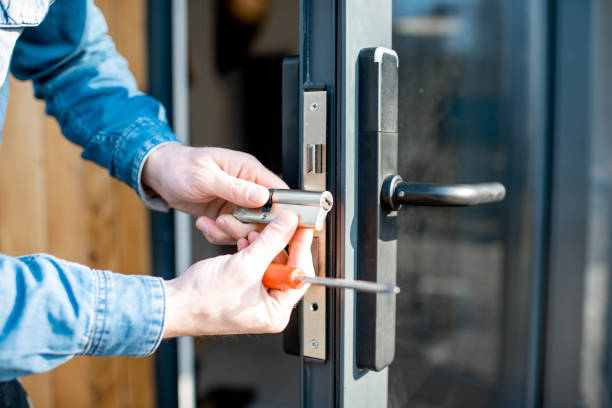
Door security hardware must be installed correctly to function properly.
Poor alignment can cause doors to stick, fail to close completely, or place additional stress on locks and hinges.
Professional installation can help ensure that components are fitted appropriately and that the door operates as intended.
It can also help identify other problems, such as damaged frames or worn hardware that could affect the performance of a new lock.
Door Alignment and Maintenance
Even high-quality door hardware can experience problems if the door itself is poorly aligned.
Signs of alignment issues can include:
- Difficulty closing the door
- A door that rubs against the frame
- A lock that does not engage smoothly
- Loose hinges
- Gaps around the door
- Unusual movement or noise
These problems should be evaluated rather than ignored.
Routine maintenance can include tightening appropriate hardware, checking hinges, inspecting locks, and confirming that doors close properly.
Security for Restricted Areas
Commercial properties often contain spaces that should not be accessible to everyone.
Examples include:
- Server rooms
- Records rooms
- Storage areas
- Financial offices
- Employee-only spaces
- Equipment rooms
- Supply rooms
Access control can help businesses manage these areas more effectively.
The appropriate system depends on the number of users, frequency of access, property layout, and operational requirements.
Emergency Exit Considerations
Door security should never be planned independently of emergency access requirements.
Certain doors may need to allow people to exit quickly during an emergency. Property owners should ensure that security measures do not create inappropriate barriers to emergency egress.
Commercial buildings may have specific requirements related to emergency exits, occupancy, fire safety, and accessibility.
For this reason, security installations should be planned with applicable building requirements and professional guidance in mind.
When Should Door Hardware Be Replaced?
Door hardware may need replacement when it becomes damaged, unreliable, outdated, or incompatible with the property’s current requirements.
Repeated lock failures can be a sign that replacement is more practical than continued repair.
Businesses may also decide to upgrade door security after renovations, changes in occupancy, changes in access requirements, or other property changes.
A professional assessment can help determine which components need attention.
Choosing Reliable Door Security Installation Solutions
When selecting Reliable Door Security Installation Solutions, property owners should consider more than the lock itself.
The condition of the door, frame, hinges, hardware, usage patterns, and access requirements all matter.
A good installation process should begin with an assessment. The installer should understand what the property needs before recommending specific equipment.
For businesses, it is also useful to consider future requirements. If a company expects to expand or reorganize its offices, the access system may need to accommodate changing user requirements.
Door Security and Property Management
Door security is part of broader property maintenance.
A building can have sophisticated access hardware, but if doors are damaged, misaligned, or poorly maintained, performance may be affected.
Property managers should therefore include doors in regular inspection programs.
Checking entrance doors, employee doors, storage areas, and other frequently used access points can help identify maintenance concerns early.
NexusConnectMarketing and Security-Focused Property Information
NexusConnectMarketing focuses on helping property owners understand practical aspects of building maintenance and security.
Door security is not simply about installing a lock. It involves understanding access points, user requirements, hardware condition, maintenance needs, and the property’s overall security strategy.
An informed approach allows property owners to select solutions based on actual requirements rather than choosing equipment without considering the surrounding door system.
Final Thoughts
Reliable Door Security Installation Solutions can help property owners improve the functionality and controlled access of important entry points.
Whether the property is a home, office, retail location, warehouse, or multi-tenant building, properly installed and maintained door hardware can play an important role in everyday property management.
The right solution depends on the type of door, location, frequency of use, access requirements, and applicable safety considerations.
Regular inspections are equally important. Locks, hinges, handles, closers, frames, and other components can wear over time and should be addressed when problems appear.
With proper planning, professional installation, and ongoing maintenance, door security can become a practical part of a broader property management strategy. NexusConnectMarketing supports an informed approach that considers security, usability, maintenance, and responsible access management together.